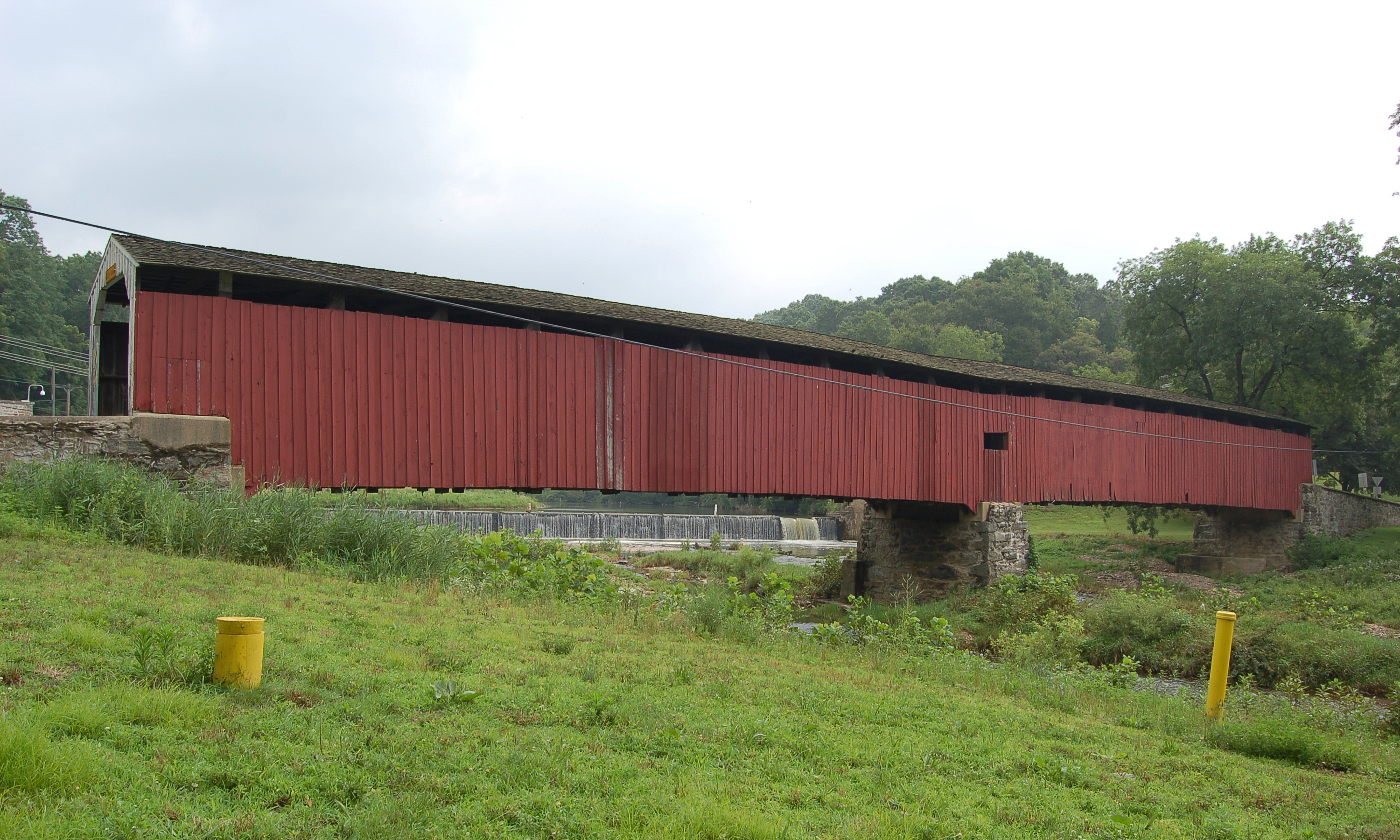
Pool Forge Covered Bridge
Built in 1859, this 157-foot Burr Truss bridge spans the Conestoga River and is named for the historic iron forge it once served.
About Pool Forge Covered Bridge
Pool Forge Covered Bridge, constructed in 1859, stands as a unique connection to Lancaster County's 19th-century iron industry. This 157-foot span crosses the Conestoga River and takes its name from Pool Forge, an iron-making facility that once operated nearby. The bridge represents an interesting intersection of Pennsylvania's two great 19th-century industries - iron production and covered bridge construction. While the forge produced iron using traditional charcoal-fired methods, the bridge employed the wooden Burr Truss design that had made Pennsylvania's covered bridges famous. Pool Forge Bridge serves as a reminder that Lancaster County's economy encompassed both agricultural and industrial pursuits during the pre-Civil War era.
History
Built in 1859 on the eve of the Civil War, Pool Forge Covered Bridge was constructed to provide access to Pool Forge, one of numerous iron-making facilities that operated in Pennsylvania during the 19th century. These forges converted local iron ore into bar iron using charcoal from surrounding forests, supplying raw material for blacksmiths and manufacturers. The bridge's substantial 157-foot span was necessary to cross the Conestoga River, one of Lancaster County's major waterways. The Burr Truss design was chosen for its proven ability to handle longer spans and heavier loads - important considerations for a bridge serving an industrial facility. The bridge has survived over 165 years, outlasting the forge it was named for. The forge eventually closed as Pennsylvania's iron industry shifted to larger-scale operations using coal and eventually transitioning to steel. The bridge continues serving vehicle traffic while preserving the memory of Lancaster County's diverse 19th-century economy. Ongoing maintenance efforts have ensured this historically significant structure remains functional and preserved for future generations.
Architecture
The 157-foot bridge employs a robust Burr Truss design engineered for the substantial span across the Conestoga River. The Burr Truss combines a supporting arch with multiple kingpost trusses, creating efficient load distribution across the bridge's considerable length. The engineering required for such a span demonstrates the advanced capabilities of Pennsylvania's bridge builders in the late 1850s. The structure features massive hand-hewn timbers joined using traditional mortise-and-tenon joinery secured with large wooden pegs. The bridge's red weatherboard siding protects these structural members from the elements while creating the classic covered bridge appearance. White-painted portals frame both entrances in the traditional Lancaster County style. The interior reveals the impressive timber framing required for longer covered bridge spans, with substantial beams and complex truss work clearly visible. The bridge's connection to an iron forge creates an interesting contrast - while the forge represented Pennsylvania's industrial future, the wooden covered bridge represented a construction tradition that would soon be challenged by iron and steel structures.
Visiting
Pool Forge Covered Bridge is located in Lancaster County where it spans the Conestoga River near the site of the historic Pool Forge. The bridge continues to carry vehicle traffic and provides visitors with an experience of traveling through a historically significant covered bridge connected to Pennsylvania's iron industry heritage. The Conestoga River setting offers scenic beauty, particularly during spring when the river runs high or during autumn when surrounding trees display vibrant fall colors. The site of the former Pool Forge provides historical context for understanding Lancaster County's diverse 19th-century economy beyond agriculture. The bridge's connection to iron-making adds an interesting dimension for visitors exploring Pennsylvania's industrial heritage. Photography opportunities are excellent from multiple vantage points along the river. Visitors should respect that this is a working bridge serving local residents and drive carefully through the single-lane structure. The bridge can be combined with visits to other Conestoga River and Lancaster County covered bridges for a comprehensive tour. Best visited April through November when weather permits comfortable exploration and the river and surrounding landscape are at their most scenic.
Location
Similar Bridges in category

Hunsecker's Mill Covered Bridge

Herr's Mill Covered Bridge