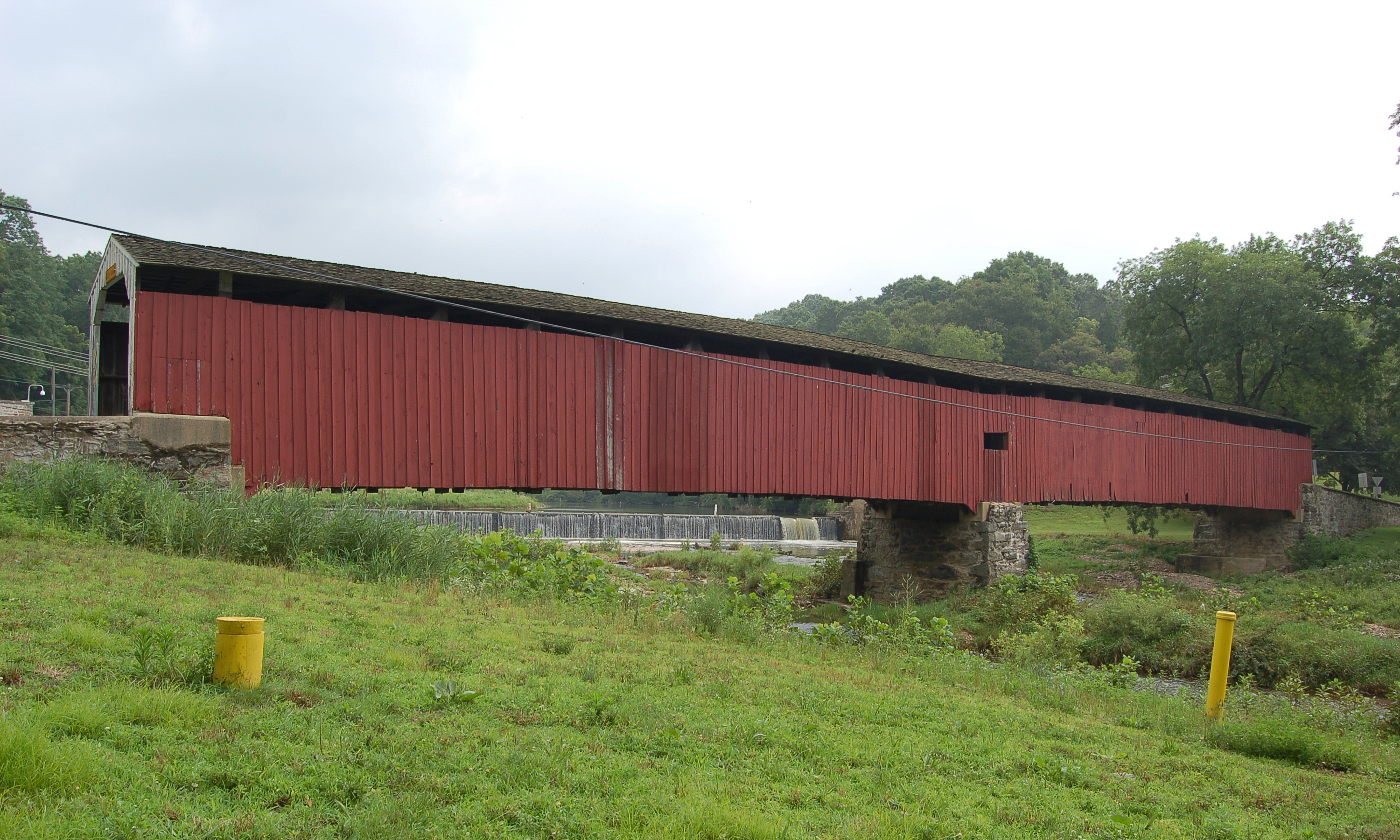
Pinetown Covered Bridge
Built in 1867, this 133-foot Burr Truss bridge spans Conestoga Creek in Lancaster County, Pennsylvania.
About Pinetown Covered Bridge
Pinetown Covered Bridge, built in 1867, represents Lancaster County's immediate post-Civil War period of infrastructure reconstruction. This 133-foot span crosses Conestoga Creek and served the Pinetown community, providing essential transportation links for the region's agricultural economy. The bridge's 1867 construction occurred just two years after the Civil War's end, during a period when Pennsylvania was recovering from the conflict and reinvesting in infrastructure. Pinetown Bridge demonstrates the resilience of Lancaster County's agricultural economy and the continued importance of covered bridges in rural Pennsylvania even as the nation underwent dramatic post-war transformation.
History
Constructed in 1867, Pinetown Covered Bridge was built during the challenging years of post-Civil War Reconstruction when Pennsylvania was working to restore its infrastructure and economy. The bridge provided crucial access across Conestoga Creek for the Pinetown farming community, connecting farms with markets and neighboring settlements. The decision to build a traditional covered bridge in 1867 reflects both the proven reliability of the Burr Truss design and the economic realities of rural communities for whom wooden bridges remained the practical choice. The bridge has survived over 155 years of service, weathering major floods, ice flows, and the transition from agricultural wagons to automobile traffic. The structure has been maintained through cooperative efforts of county authorities and preservation advocates who recognize its historical value as a monument to post-Civil War rural Pennsylvania. Regular inspections and careful repairs have ensured the bridge continues serving vehicle traffic while preserving its 19th-century character.
Architecture
The 133-foot bridge employs a substantial Burr Truss design engineered for Conestoga Creek's width at the Pinetown crossing. The Burr Truss combines a supporting arch with multiple kingpost trusses, creating efficient load distribution across the bridge's considerable span. The structure features hand-hewn timbers joined using traditional mortise-and-tenon joinery secured with wooden pegs - construction methods that Pennsylvania bridge builders continued using even after the Civil War. The bridge's red weatherboard siding protects the structural members from weather deterioration while creating the classic covered bridge appearance. White-painted portals frame both entrances following Lancaster County's traditional aesthetic. The interior reveals the substantial timber framing characteristic of post-Civil War bridge construction, demonstrating that Pennsylvania's bridge building expertise survived the war years intact. The bridge's excellent preservation allows visitors to appreciate the quality of 1860s craftsmanship and the engineering sophistication that made these structures so durable.
Visiting
Pinetown Covered Bridge is located in Lancaster County where it spans Conestoga Creek near the community of Pinetown, surrounded by the productive farmland that has characterized this region throughout its history. The bridge continues to carry vehicle traffic and provides visitors an authentic experience of traveling through a working post-Civil War covered bridge. Conestoga Creek offers peaceful rural scenery with opportunities for nature observation and photography. The area features traditional Pennsylvania Dutch Country landscapes with working farms and classic barns. The bridge is particularly photogenic during spring when the creek flows high and surrounding vegetation is lush, or during autumn when fall foliage creates vibrant color displays. Visitors should drive carefully and respectfully through this working bridge serving local residents. The bridge can be combined with visits to other Conestoga Creek and Lancaster County covered bridges for a comprehensive tour. Best visited April through November when weather permits comfortable exploration of the surrounding countryside.
Location
Similar Bridges in category

Hunsecker's Mill Covered Bridge

Herr's Mill Covered Bridge