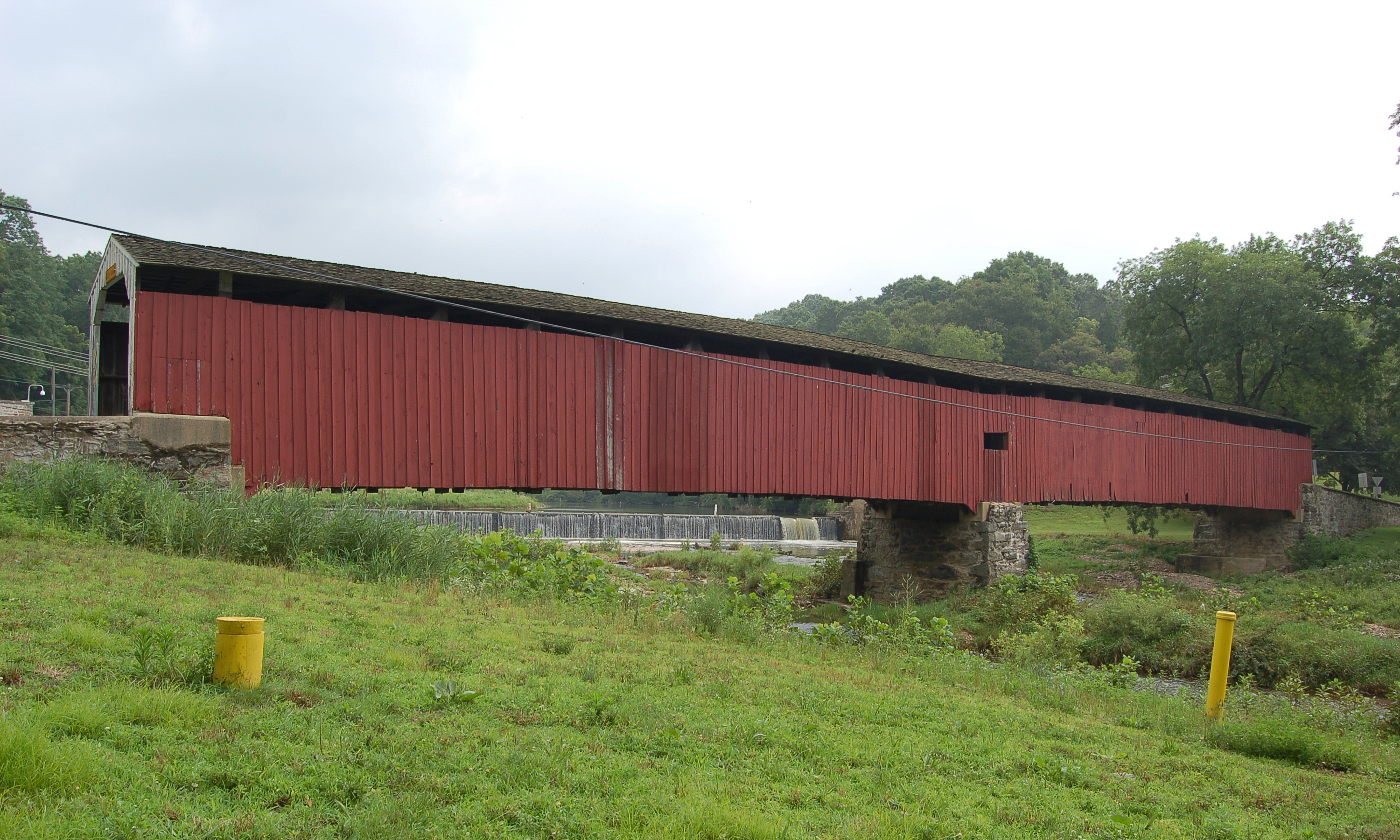
Leaman Place Covered Bridge
Built in 1892, this 146-foot Burr Truss bridge spans Pequea Creek and represents one of the last covered bridges built in Lancaster County.
About Leaman Place Covered Bridge
Leaman Place Covered Bridge, built in 1892, represents the final era of traditional covered bridge construction in Lancaster County. This 146-foot span crosses Pequea Creek and stands as one of the last covered bridges built in the county before iron and steel structures became standard. The bridge's late construction date makes it historically significant as evidence that traditional wooden covered bridges remained the practical choice for rural Lancaster County crossings even as the 19th century drew to a close. Leaman Place Bridge demonstrates the enduring value of proven engineering and the continued skill of Pennsylvania's bridge builders at a time when their craft was gradually becoming obsolete in most of America.
History
Constructed in 1892, Leaman Place Covered Bridge was built during a period when covered bridge construction had largely ended in most regions, replaced by iron and steel structures. However, in rural Lancaster County, traditional covered bridges remained economically practical, utilizing readily available local timber and drawing on generations of bridge-building expertise. The bridge served the Leaman Place community, providing crucial access across Pequea Creek for farmers and local residents. The 1890s were a transitional decade in rural Pennsylvania, with agricultural communities beginning to feel the influence of industrialization while maintaining many traditional practices. The decision to build a covered bridge in 1892 reflects the conservative pragmatism of Lancaster County communities and their confidence in proven engineering. The bridge has survived over 130 years of service, demonstrating that even these late-era covered bridges were built to the same high standards as their predecessors. Ongoing maintenance by county authorities and preservation organizations has ensured the bridge continues serving vehicle traffic while standing as a monument to the end of Pennsylvania's covered bridge era.
Architecture
The 146-foot bridge employs the Burr Truss design that remained Pennsylvania's preferred covered bridge system even in the 1890s. The Burr Truss combines a supporting arch with multiple kingpost trusses, creating efficient load distribution across the substantial span. By 1892, Pennsylvania bridge builders had over 80 years of experience refining Burr Truss construction, and this bridge benefits from that accumulated expertise. The structure features hand-hewn timbers joined using traditional mortise-and-tenon joinery secured with wooden pegs - methods that remained effective even as industrial manufacturing transformed most other construction trades. The bridge's red weatherboard siding protects the structural members while maintaining the classic covered bridge appearance. White-painted portals follow Lancaster County's long-established aesthetic traditions. The interior reveals the mature craftsmanship of late 19th-century bridge building, with precise timber framing that has endured for over a century. The bridge stands as evidence that traditional wooden covered bridge construction remained viable and effective even at the dawn of the steel age.
Visiting
Leaman Place Covered Bridge is located in Lancaster County where it spans Pequea Creek, surrounded by the productive farmland that has characterized this region throughout its history. The bridge continues to carry vehicle traffic and provides visitors an authentic experience of traveling through one of Pennsylvania's last-built covered bridges. Pequea Creek offers beautiful natural surroundings, particularly during spring when water flows high and vegetation bursts into bloom, or during autumn when fall colors create spectacular displays. The bridge's late construction date adds historical interest for visitors exploring the evolution of American bridge engineering. The area provides excellent photography opportunities, with the bridge's traditional appearance offering no visual clues to its status as one of Lancaster County's youngest covered bridges. Visitors should respect that this is a working bridge serving local residents and drive carefully through the single-lane structure. The bridge can be combined with visits to older Lancaster County covered bridges for an interesting comparison showing the consistency of Pennsylvania's covered bridge tradition. Best visited April through November when weather permits comfortable exploration of the surrounding countryside.
Location
Similar Bridges in category

Hunsecker's Mill Covered Bridge

Herr's Mill Covered Bridge