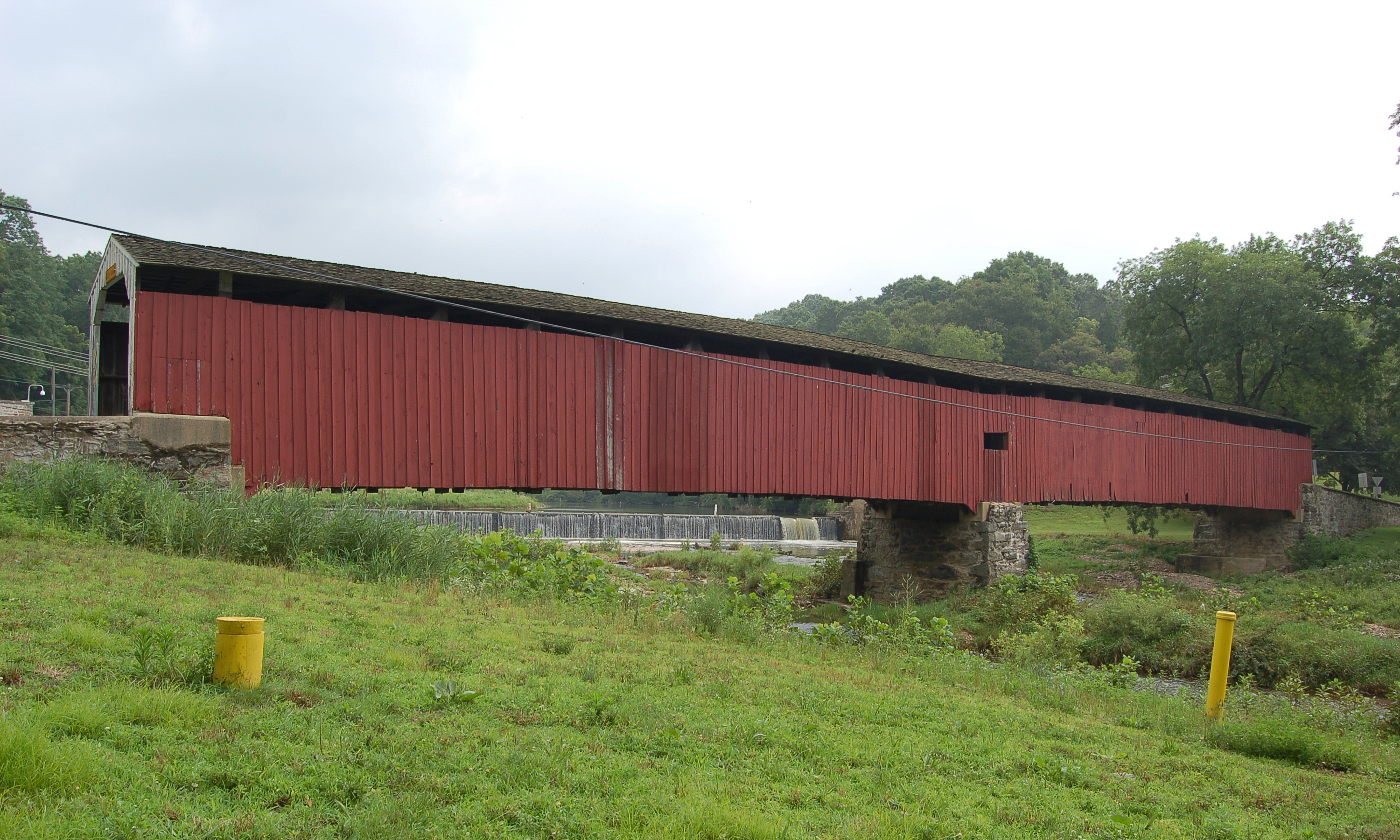
Keller's Mill Covered Bridge
Built in 1850, this 103-foot Burr Truss bridge spans Conestoga Creek in Lancaster County, Pennsylvania.
About Keller's Mill Covered Bridge
Keller's Mill Covered Bridge, built in 1850, represents the peak era of covered bridge construction in Lancaster County. This 103-foot span crosses Conestoga Creek and served Keller's Mill, one of many water-powered grain processing facilities that drove Lancaster County's agricultural economy in the mid-19th century. The bridge embodies the symbiotic relationship between Pennsylvania's covered bridges and the mills they served - the mills needed bridges to bring customers, and the bridges needed mills to justify their construction. Keller's Mill Bridge has survived 175 years of service, standing as testament to both the quality of mid-19th century Pennsylvania bridge construction and the ongoing commitment to preserving these iconic structures.
History
Constructed in 1850 during the height of Pennsylvania's covered bridge building boom, Keller's Mill Covered Bridge was built to provide access to Keller's Mill, where local farmers brought grain for grinding. The 1850s represented peak prosperity for Lancaster County's agricultural economy, and substantial bridges were necessary infrastructure connecting farms with mills and markets. The Burr Truss design was chosen for its proven reliability - by 1850, Pennsylvania bridge builders had decades of experience perfecting this structural system. The bridge has witnessed 175 years of Lancaster County history, from the prosperous pre-Civil War agricultural era through industrialization and into the modern age. Unlike many covered bridges that were demolished and replaced by modern structures, Keller's Mill Bridge received consistent maintenance that allowed it to continue serving vehicle traffic. The mill eventually ceased operations, but the bridge remains a vital local transportation link and treasured historical landmark. Preservation efforts by county authorities and local advocates have ensured the bridge's survival for future generations.
Architecture
The 103-foot bridge employs a well-proportioned Burr Truss design engineered for the width of Conestoga Creek at this location. The Burr Truss system combines a supporting arch with multiple kingpost trusses, creating efficient load distribution and exceptional strength. The bridge features hand-hewn timbers joined using traditional mortise-and-tenon joinery secured with wooden pegs - construction techniques that Pennsylvania bridge builders had refined to near perfection by 1850. The structure's red weatherboard siding protects the structural members from deterioration while creating the classic covered bridge aesthetic. White-painted portals and approach railings follow Lancaster County's traditional color scheme. The interior reveals the careful craftsmanship typical of mid-19th century bridge construction, with precise timber framing and joinery that has held firm for 175 years. The bridge's mid-length span demonstrates how the Burr Truss design could be effectively scaled to match various waterway widths.
Visiting
Keller's Mill Covered Bridge is located in Lancaster County near Conestoga Creek, surrounded by the productive farmland that has characterized this region for over two centuries. The bridge continues to carry vehicle traffic and provides visitors an authentic experience of traveling through a working historic covered bridge. Conestoga Creek offers peaceful rural scenery typical of Pennsylvania Dutch Country, with opportunities for nature observation and creek exploration. The area around the former mill site provides historical context for understanding the economic importance of these bridge-and-mill combinations in 19th-century agricultural communities. The bridge is particularly photogenic during spring when the creek flows high and vegetation is lush, or during autumn when fall colors create stunning displays. Visitors should drive carefully and respectfully through this working bridge that continues serving local residents. The bridge can be combined with visits to other Lancaster County covered bridges for a comprehensive tour of the region's bridge heritage. Best visited April through October when weather permits comfortable exploration of the surrounding countryside.
Location
Similar Bridges in category

Hunsecker's Mill Covered Bridge

Herr's Mill Covered Bridge