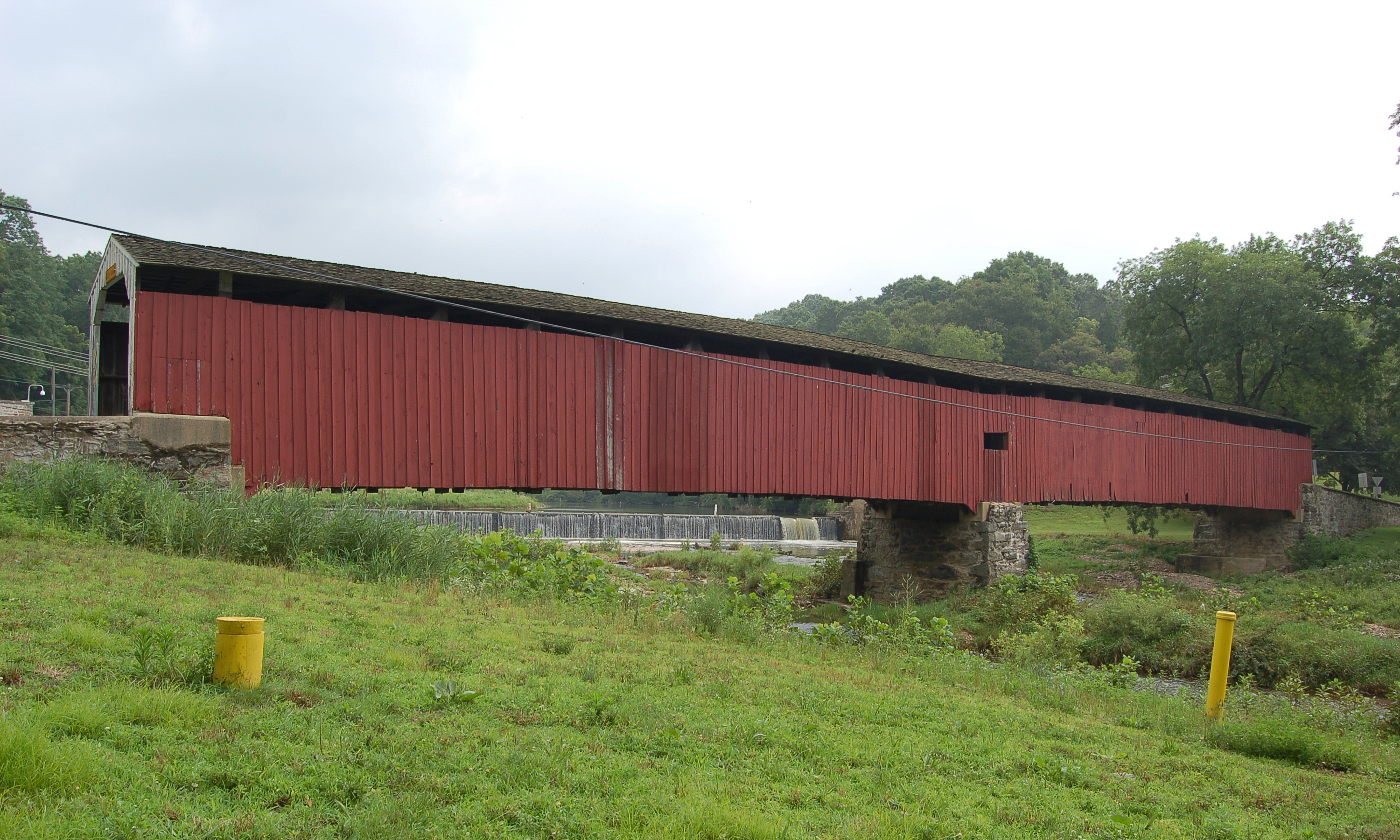
Colemanville Covered Bridge
Built in 1856, this substantial 140-foot Burr Truss bridge spans Pequea Creek in Lancaster County, Pennsylvania.
About Colemanville Covered Bridge
Colemanville Covered Bridge, constructed in 1856, stands as one of Lancaster County's most substantial and well-preserved covered bridges. This impressive 140-foot span crosses Pequea Creek, demonstrating the engineering capabilities of Pennsylvania's mid-19th century bridge builders. The bridge takes its name from the nearby community of Colemanville and has served as a vital transportation link for over 165 years, connecting rural farming communities with market towns throughout Lancaster County's productive agricultural region.
History
Built in 1856 during the peak of covered bridge construction in Pennsylvania, Colemanville Covered Bridge was erected to span Pequea Creek at a strategically important crossing point. The 1850s represented the height of agricultural prosperity in Lancaster County, and substantial bridges like this one were necessary infrastructure supporting the transport of farm goods to urban markets. The bridge witnessed the passage of Conestoga wagons loaded with grain, the turmoil of the Civil War era, and the gradual modernization of rural Pennsylvania. Unlike many covered bridges that were replaced by modern structures, Colemanville Bridge received consistent maintenance and upgrades that allowed it to continue serving vehicle traffic into the 21st century. The bridge represents continuity between Lancaster County's agricultural past and present.
Architecture
The 140-foot bridge employs a robust Burr Truss design engineered to handle the considerable span across Pequea Creek. The Burr Truss system, combining a supporting arch with multiple kingpost trusses, distributes loads efficiently across the entire length of the bridge. The structure features massive hand-hewn timbers joined using traditional mortise-and-tenon joinery secured with wooden pegs - construction techniques that have proven remarkably durable over 165 years. The bridge's red weatherboard siding protects the structural members from weather while creating the classic covered bridge aesthetic. White-painted portals and approaches follow Lancaster County's traditional color scheme. The interior reveals the impressive scale of the truss work required for longer covered bridge spans.
Visiting
Colemanville Covered Bridge is located in Lancaster County near the community of Colemanville, surrounded by the productive farmland and rolling hills characteristic of Pennsylvania Dutch Country. The bridge continues to carry vehicle traffic and provides an authentic experience of traveling through a working historic covered bridge. Pequea Creek offers scenic beauty, particularly during spring when water levels are high and surrounding vegetation is lush. The area provides excellent photography opportunities, especially during autumn when foliage creates vibrant color displays. Visitors should respect that this is a working bridge serving local residents. The bridge is easily accessible and can be combined with tours of other Lancaster County covered bridges. Best visited April through November when weather permits comfortable exploration.
Location
Similar Bridges in category

Hunsecker's Mill Covered Bridge

Herr's Mill Covered Bridge